

by Ann Wessel
BWSR Conservation Marketing Coordinator
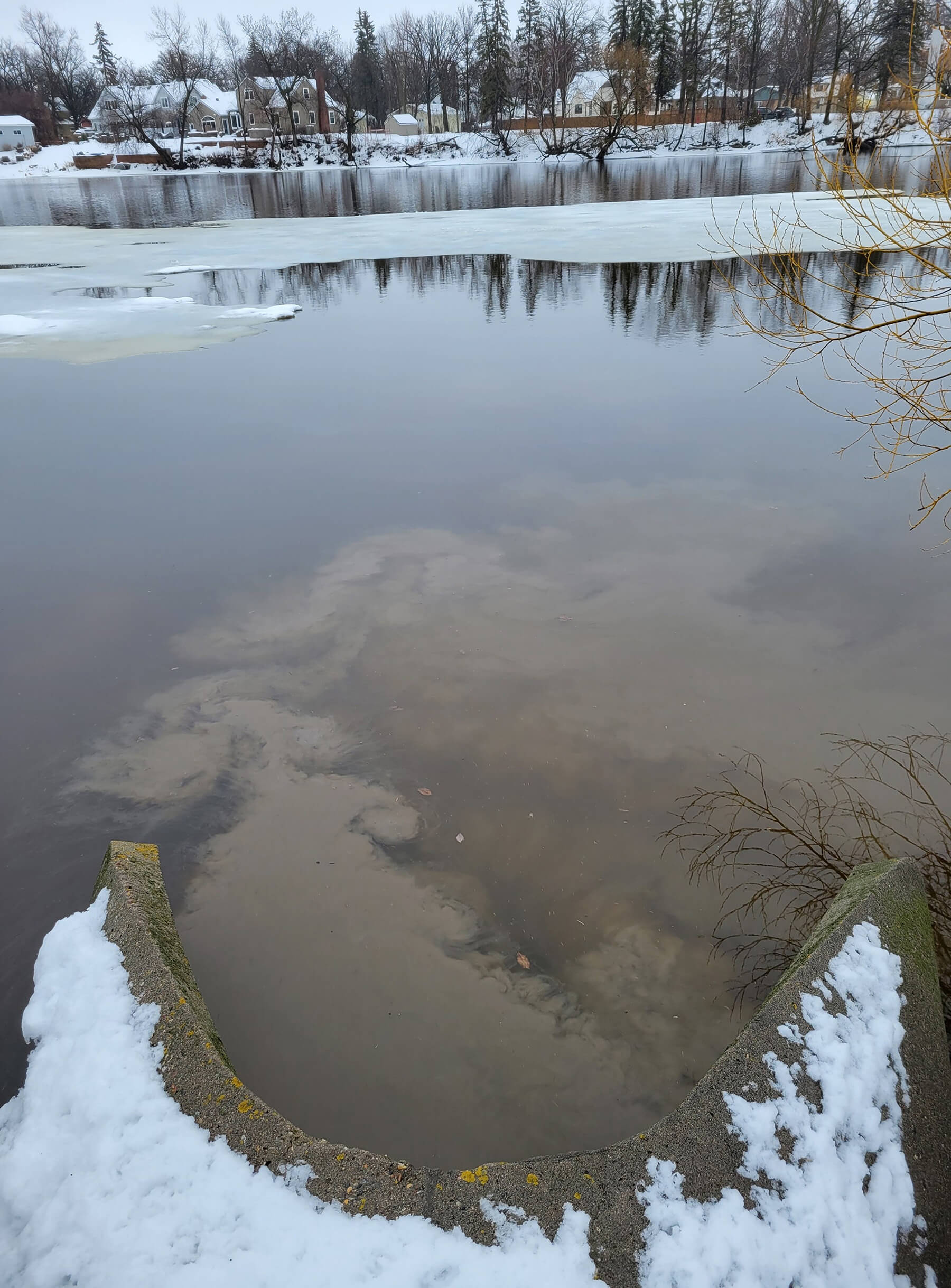
Raw sewage, industrial waste, urban stormwater and agricultural runoff turned Chief’s Coulee into a polluted slurry before it entered the Red Lake River just upstream from the City of Thief River Falls’ drinking water intake.
That was 10 years ago, when reports of a sewage smell led city staff to a septic system discharging directly into the coulee. An assessment by Red Lake Watershed District staff revealed more violations. The E. coli level in one RLWD sample was too high for the lab to measure, even after diluting it 10 times. Garbage and pollutants entered the coulee as it flowed past a grain elevator, recycling business, city Public Works Department facility and railroad tracks on the north edge of town.
Since then, the City of Thief River Falls and Pennington Soil and Water Conservation District staff have worked with property owners to fix failing septic systems. Minnesota Pollution Control Agency enforcement has kept rotting grain- and fertilizer-contaminated wastewater out of the river.
Most recently, the RLWD, city and SWCD have been working with landowners on $2.3 million in water quality and flood damage reduction projects targeting stormwater and agricultural runoff.
“Our concern is water quality within the City of Thief River Falls,” said Wayne Johnson, Thief River Falls water systems superintendent. The city provides about 3,400 residential and commercial customers with water.
“Our goal is to get cleaner water coming in to our intake,” Johnson said. “That will reduce our chemical usage, our costs, and improve water quality that we’re putting out into the system.”
By late 2025, erosion- and drainage-control measures upstream complemented work on the north edge of town, where a sand filter and vegetated strips now filter and slow runoff. Contractors piped a segment of Chief’s Coulee underground, and installed two hydrodynamic separators to catch trash and pollutants.
“(They) capture all of the stormwater — not just from the coulee, but also a good portion of the northern part of the city — and filter and remove any type of garbage,” said Randy Knott, HDR project manager and civil designer. “(Each one) also has a separator that catches oil and chemicals and holds them. And the city will be able to pop the cover and clean it out annually.”
In addition to regular maintenance, the hydrodynamic separators give crews emergency access in case of a spill.
The City of Thief River Falls and the RLWD each contributed $800,000 toward the recent projects — the city from its stormwater utility fund, the watershed from its capital improvement fund.
“The partners were awesome. We work really well with the city of Thief River Falls, the Pennington SWCD — we’ve got an extremely good track record of working together on projects, all for the common good of the area,” said RLWD Administrator Tammy Audette. “We had very good cooperation by the landowners.”
Two sources of Clean Water Funds from the Minnesota Board of Water and Soil Resources — a $428,750 competitive drinking water grant awarded to the Pennington SWCD in 2023, and part of the Watershed-Based Implementation Funding awarded to the Red Lake River Watershed Partnership — support water quality elements of the work. To date, WBIF has funded about $22,000 in urban best management practices plus $41,000 in design work; it will also cover some of the agricultural best management practices.
A $214,000 award from the Red River Watershed Management Board and a $106,000 flood hazard mitigation grant from the Minnesota Department of Natural Resources support elements tied to flood mitigation.
With an agreement between the RLWD and Pennington County in place, in 2025, contractors diverted part of the 710-acre headwaters north to the Thief River via County Ditch 70.
“If we get a large rain event (or) spring flooding … it will be diverted and go into the (Thief) River prior to coming into the city,” Audette said. “That’s the flood-control benefit. Otherwise, it’s a water quality project.”
Related work replaced culverts and installed side-water inlets. A grassed waterway constructed in fall 2025 will carry water from agricultural ditches to Chief’s Coulee via a culvert under Highway 32. The flood damage reduction measures will affect both agricultural land and property within city limits.
Pennington SWCD Conservation Technician Matthew Sorvig worked with a landowner and renter to install the 20-foot-wide, 970-foot-long grassed waterway in a field north of town, where it will filter and slow runoff.
“Converting it from conventional ag land to grass and vegetation will help prevent that sediment (from) getting into the river,” Sorvig said.
Sediment contributes to turbidity; the nutrients it carries can feed algae blooms.
“We want to protect water quality in the Red Lake River because it’s a drinking water source, and we’re also trying to improve water quality downstream of Thief River Falls,” said Corey Hanson, RLWD water quality coordinator. “We’re trying to do projects in that area, especially as part of the Red Lake River One Watershed, One Plan. That is one of our priority areas to implement projects to improve water quality.”
Between Thief River Falls and Red Lake Falls, the Red Lake River becomes impaired for turbidity and sediment.
Reducing sediment-loading to the Red Lake River carries water quality benefits from the Red River north to Lake Winnipeg.