
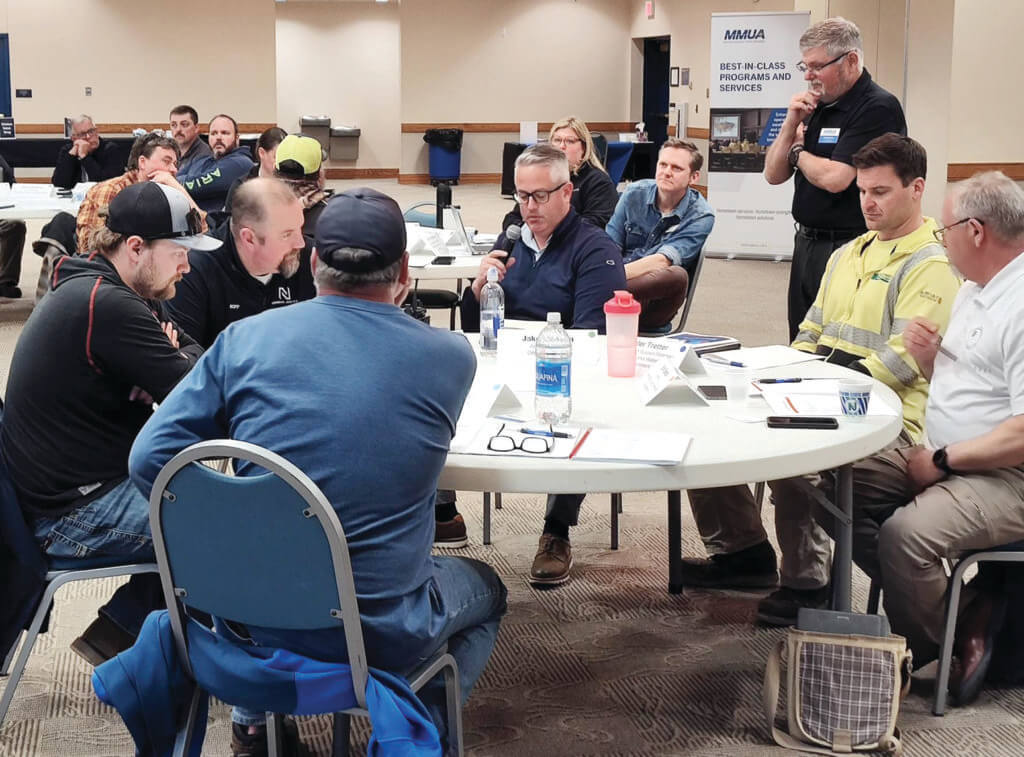
Utility providers, emergency managers, and public-sector partners from northwest Minnesota gathered Tuesday, April 28 in Thief River Falls for a regional emergency preparedness tabletop exercise. The exercise was focused on a coordinated response to a large-scale severe weather event.
The discussion-based exercise, hosted by the Minnesota Municipal Utilities Association, simulated a hypothetical Northern Plains derecho impacting the electric grid and critical community services across Thief River Falls and the surrounding region. Participants worked through response and recovery challenges affecting electric utilities, water and wastewater systems, public safety, healthcare facilities, transportation, telecommunications, and local government operations.
The tabletop emphasized incident command coordination, emergency operations center activation, and consistent public messaging during a prolonged emergency. Participants examined how utilities and community partners would share information, manage resource constraints, support fatigued personnel, and coordinate mutual aid as conditions escalated throughout the simulated event, enacting an emergency action plan.
Representatives attended from municipal utilities, electric cooperatives, transmission providers, emergency management agencies, public works departments, healthcare systems, state agencies, and the Minnesota National Guard. The exercise encouraged open discussion and cross-sector collaboration to identify gaps in emergency action plans and reinforce best practices for regional coordination.
The Thief River Falls exercise is part of a series of six regional tabletop exercises MMUA is conducting statewide in 2026 through a grant from the Minnesota Department of Commerce, aimed at strengthening utility resilience and community preparedness for high-impact events.